 AI Studio
Let's Talk
AI Studio
Let's Talk
Stacks AI Studio / Funeral Homes
AI for Funeral Homes
"I feel behind on AI, and there is no chance I can catch up." If that is the sentence in your head, you are exactly who I work with. I am not selling software or theory-based advice. I run my own ten person managed services business on Claude, I know the value it adds every week, and now I help owners do the same inside funeral homes like yours: your team trained, jobs automated, hours saved. Saying yes to starting puts you ahead of many of your competitors.

Experience, Not Theory
That is our first four automations at Stacks, across a ten person team. We took on more clients, and gross margin went from 26% to 56% in twelve months. AI was not the only driver. It was the biggest one. It also set a new standard for what my team sends out: the same bar for research, formatting, and finish on everything that leaves the building, no shortcuts.
Casey Templeton, Founder of Stacks. Nashville.
"In one week I went from a two-hour session with Casey to a brand new marketing site and firing the marketing firm I'd used for two years. If Casey wants to work with you, don't be a dummy. Just do it."
The Week
Your Week. I Know It.
Five jobs that eat the week. This is the work an automation goes after first.
The arrangement conference ends with a legal pad. Those notes get retyped into every document after it.
The statement gets built off the last one. A line carries over that this family never selected.
The death certificate is missing one detail. The permit waits while somebody calls the family back.
The obituary is due before the paper's deadline. Someone writes the first draft after the visitation ends.
Aftercare gets promised and never gets scheduled. The thirty day call happens when somebody remembers.
When the family owns it, the same people take the first call, do the filings, and stay on call.
Source: National Funeral Directors Association, September 2025.
The First Step
Two Sessions. Two Hours Each.
For most funeral homes, this is the first step. Homework first, then two sessions, two hours each. In person if you are near Nashville, or over Zoom. $1,950.
For the math: one person at $25 an hour who gets two hours a week back is worth about $2,600 a year. If the first automation does that for one employee, it pays for itself with room to spare. And if after our first session you do not see a job worth automating, you pay nothing.
An automation is a repeated piece of work you teach Claude once. Your team runs it every day, you own it and tune it, and it carries the work to 80 percent so your people finish the 20 that needs their judgment.
"Casey taught me how to actually put AI to work. I generate quotes faster, my workflow is smoother, and I'm making more money because of it. One of the best investments I've made in my business."
01
Homework
Before we ever meet, you pull real examples of the work that eats your week: actual documents, actual messages, nothing cleaned up for me.
02
Session One
Two hours. We map how your funeral home actually runs, get Claude set up for your team, and train you on how to operate it.
03
Session Two
Two hours. We start building your first automations and put together the training your team needs to run Claude every day.
04
What You Leave With
Claude running for your team, your people trained on it, and one job automated and in use.
Five Automations We Could Build In Your Funeral Home.
One page, no obligation. Proof of what we could build together, before we ever talk.
One email with the PDF. No newsletter, no drip campaign.
deaths in the United States in 2024.
Source: U.S. Centers for Disease Control and Prevention, February 2026.
The FTC Funeral Rule governs price disclosure, so the general price list and the statement of goods and services stay documents your licensed director owns and signs.
The Stack
Claude Sits In The Middle.
It works with the tools you already run. It reads from your case management system, your forms and price list, and your books, and writes back where it can.
Start with one connection, not all of them. The first automation usually needs one export from your case management system, and that is the whole first step. Once it earns its keep, the next system comes in, then the one after that. Every automation gets sharper, because Claude stops reading one screen at a time and finally sees the whole funeral home.
The Numbers
The Numbers Funeral Directors Are Seeing.
That feeling of being behind is not in your head. For funeral homes, what families choose keeps shifting, year after year.
US small businesses using generative AI
Source: U.S. Chamber of Commerce, August 2025.
Cremation rate projected for 2025
Source: National Funeral Directors Association, September 2025.
Questions
Questions, Answered.
I feel like I am already behind on AI. Is it too late?
No, and you are not as far behind as you think. The owners who feel furthest behind often move fastest once they start, because they have not spent a year on tools that did not stick. You do not need a strategy, a budget cycle, or a technical person on staff. You need four hours and one job that is costing you time every week. That is the whole first step.
Will this replace my staff?
No, and that is the whole design. An automation carries a job to 80 percent quickly and your director takes the final 20 percent over the finish line. Efficiency goes up for everyone, the funeral home grows without the headcount it used to need, margins grow with it, and your people spend their time with families instead of retyping.
Will it work with the software we already run?
Usually, whether that is Passare, Osiris, SRS Computing, or Tribute Technology. Some systems give me an API, some give me a nightly export, and a few give me nothing but a screen to copy from. I tell you which one you have before I scope anything.
Does any of this talk to a family?
No. Everything I build is admin. An automation never sits in the arrangement conference, never speaks to a family, and never writes the eulogy. It drafts from notes your director already took, and your director signs it. If your website provider has its own obituary tool, that is a different job.
Will the Funeral Rule be a problem?
The price list and the statement stay yours to sign. The Funeral Rule sets what has to be disclosed and when, and a draft does not change that. An automation fills the statement of goods and services from your own price list and what your director wrote down, then stops. Nothing sets a price, adds an item, or suggests one to a family.
What about the death certificate and the permit?
It assembles the details. Your director files. An automation pulls the family details from the arrangement notes into your filing worksheet and marks what is missing, like a maiden name or a place of birth. The signature and the filing stay with the licensed director.
What happens to a family's information?
Your case management system stays the system of record. Where a job can run without names, I do it that way. Where it cannot, the data path is written down and you approve it before any automation runs.
Who owns what you build?
You own the automations and the documentation. They live in your account, written in plain language, so your team can read them and change them. If you stop working with me, nothing walks out the door.
What if we get to the end and nothing is worth automating?
Then you pay nothing. If after our first session you do not see a job worth automating, the engagement ends there and there is no charge. The first session either surfaces a job worth the money or it does not, and that risk is mine, not yours.
Why $1,950?
Because the format is small on purpose. Homework, two working sessions of two hours each, and the setup work around them. For the math: one person at $25 an hour who gets two hours a week back is worth about $2,600 a year. If the first automation does that for one employee, it has paid for itself with room to spare. Every number in that sentence is yours to check.
Who You Will Be Working With
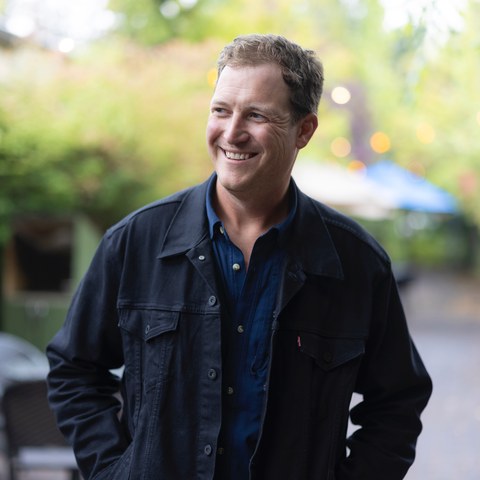
Casey Templeton.
Founder of Stacks, a ten person business in Nashville that runs on Claude. Both sessions are with him directly, and every message from this page lands in his inbox, not a queue.
Start Here
Start With A Conversation Between Two Small Business Owners.
Tell me about your funeral home. I take on two or three of these engagements a month. Every message comes to me and I answer it myself. The first conversation costs nothing.
Book A 15 Minute Call"A fear of not understanding AI had kept me from diving in. Casey's coaching changed that. It opened my eyes to a sea of possibilities and left me more confident to explore. Come open-minded, and see where your imagination takes you."
I reply to every message. No newsletter, no drip campaign.