 AI Studio
Let's Talk
AI Studio
Let's Talk
Stacks AI Studio / Dental Practices
AI for Dental Practices
"I feel behind on AI, and there is no chance I can catch up." If that is the sentence in your head, you are exactly who I work with. I am not selling software or theory-based advice. I run my own ten person managed services business on Claude, I know the value it adds every week, and now I help owners do the same inside practices like yours: your team trained, jobs automated, hours saved. Saying yes to starting puts you ahead of many of your competitors.

Experience, Not Theory
That is our first four automations at Stacks, across a ten person team. We took on more clients, and gross margin went from 26% to 56% in twelve months. AI was not the only driver. It was the biggest one. It also set a new standard for what my team sends out: the same bar for research, formatting, and finish on everything that leaves the building, no shortcuts.
Casey Templeton, Founder of Stacks. Nashville.
"In one week I went from a two-hour session with Casey to a brand new marketing site and firing the marketing firm I'd used for two years. If Casey wants to work with you, don't be a dummy. Just do it."
The Week
Your Week. I Know It.
Five jobs nobody wants. This is the work an automation goes after first.
The recall list gets pulled by hand. Someone spends the first hour of the week finding who lapsed.
Two claims come back denied. Nobody sees which reason repeats until the month closes.
A hygiene hole opens at two o'clock. The front desk calls down the list from memory.
Treatment plans go out as printouts. Half the patients call back to ask what they mean.
The owner rebuilds the same report. Numbers get typed twice and reconciled once.
When hygiene runs short, the recall list and the schedule carry the week.
Source: ADA Health Policy Institute, April 2026.
The First Step
Two Sessions. Two Hours Each.
For most dental practices, this is the first step. Homework first, then two sessions, two hours each. In person if you are near Nashville, or over Zoom. $1,950.
For the math: one person at $25 an hour who gets two hours a week back is worth about $2,600 a year. If the first automation does that for one employee, it pays for itself with room to spare. And if after our first session you do not see a job worth automating, you pay nothing.
An automation is a repeated piece of work you teach Claude once. Your team runs it every day, you own it and tune it, and it carries the work to 80 percent so your people finish the 20 that needs their judgment.
"Casey taught me how to actually put AI to work. I generate quotes faster, my workflow is smoother, and I'm making more money because of it. One of the best investments I've made in my business."
01
Homework
Before we ever meet, you pull real examples of the work that eats your week: actual documents, actual messages, nothing cleaned up for me.
02
Session One
Two hours. We map how your practice actually runs, get Claude set up for your team, and train you on how to operate it.
03
Session Two
Two hours. We start building your first automations and put together the training your team needs to run Claude every day.
04
What You Leave With
Claude running for your team, your people trained on it, and one job automated and in use.
Five Automations We Could Build In Your Practice.
One page, no obligation. Proof of what we could build together, before we ever talk.
One email with the PDF. No newsletter, no drip campaign.
of dentists plan chart notes as their next AI move.
Source: ADA Health Policy Institute, July 2026.
Patient data stays inside your systems and Stacks signs a BAA before any automation touches it.
The Stack
Claude Sits In The Middle.
It works with the tools you already run. It reads from your practice management system, your payer portals, and your financials, and writes back where it can.
Start with one connection, not all of them. The first automation usually needs one export from one system, and that is the whole first step. Once it earns its keep, the next system comes in, then the one after that. Every automation gets sharper as it goes, because Claude can finally see across the practice instead of one screen at a time.
The Numbers
The Numbers Dentists Are Seeing.
That feeling of being behind is not in your head. Dentists are adopting fast, and they are just as clear about where AI does not belong.
Dentists already using AI today
Source: ADA Health Policy Institute, July 2026.
Say never for treatment decisions
Source: ADA Health Policy Institute, July 2026.
Questions
Questions, Answered.
I feel like I am already behind on AI. Is it too late?
No, and you are not as far behind as you think. The owners who feel furthest behind often move fastest once they start, because they have not spent a year on tools that did not stick. You do not need a strategy, a budget cycle, or a technical person on staff. You need four hours and one job that is costing you time every week. That is the whole first step.
Will this replace my staff?
No, and that is the whole design. An automation carries a job to 80 percent quickly and your employee takes the final 20 percent over the finish line. Efficiency goes up for everyone, the practice grows without the headcount it used to need, margins grow with it, and your team spends its time on judgment instead of menial work.
Will it work with the software we already run?
Usually, whether that is Dentrix, Eaglesoft, Open Dental, or Curve. Some systems give me an API, some give me a nightly export, and a few give me nothing but a screen to copy from. I tell you which one you have before I scope anything.
Does any of this touch diagnosis?
No. Everything I build is admin. Clinical imaging tools like Overjet read radiographs and are regulated as medical devices. That is a different job from mine. I stay in the front office and the back office, and clinical judgment stays with the clinician.
What happens to patient data?
Stacks signs a BAA before any automation touches it. Where a job can be done on de-identified data, I do it that way. Where it cannot, the data path is written down and you approve it before the automation runs on anything real.
How long before we see something working?
The first automation runs in weeks, not quarters. The two sessions scope it, I build it against your real exports, and your team uses it while I refine it. One automation in production beats five in a plan.
Who owns what you build?
You own the automations and the documentation. They live in your account, written in plain language, so your team can read them and change them. If you stop working with me, nothing walks out the door.
My team is not technical. Is that a problem?
It is the case I build for. An automation is run by typing a request in plain English. The hard part is written down once, by me, with your team in the room. Nobody has to learn a tool to use one.
What if we get to the end and nothing is worth automating?
Then you pay nothing. If after our first session you do not see a job worth automating, the engagement ends there and there is no charge. The first session either surfaces a job worth the money or it does not, and that risk is mine, not yours.
Why $1,950?
Because the format is small on purpose. Two working sessions, two hours each, homework in between, and the setup work around them. For the math: one person at $25 an hour who gets two hours a week back is worth about $2,600 a year. If the first automation does that for one employee, it has paid for itself with room to spare. Every number in that sentence is yours to check.
Who You Will Be Working With
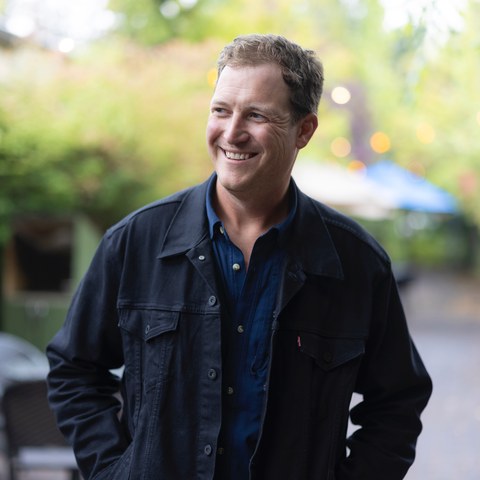
Casey Templeton.
Founder of Stacks, a ten person business in Nashville that runs on Claude. Both sessions are with him directly, and every message from this page lands in his inbox, not a queue.
Start Here
Start With A Conversation Between Two Small Business Owners.
Tell me about your practice. I take on two or three of these engagements a month. Every message comes to me and I answer it myself. The first conversation costs nothing.
Book A 15 Minute Call"A fear of not understanding AI had kept me from diving in. Casey's coaching changed that. It opened my eyes to a sea of possibilities and left me more confident to explore. Come open-minded, and see where your imagination takes you."
I reply to every message. No newsletter, no drip campaign.