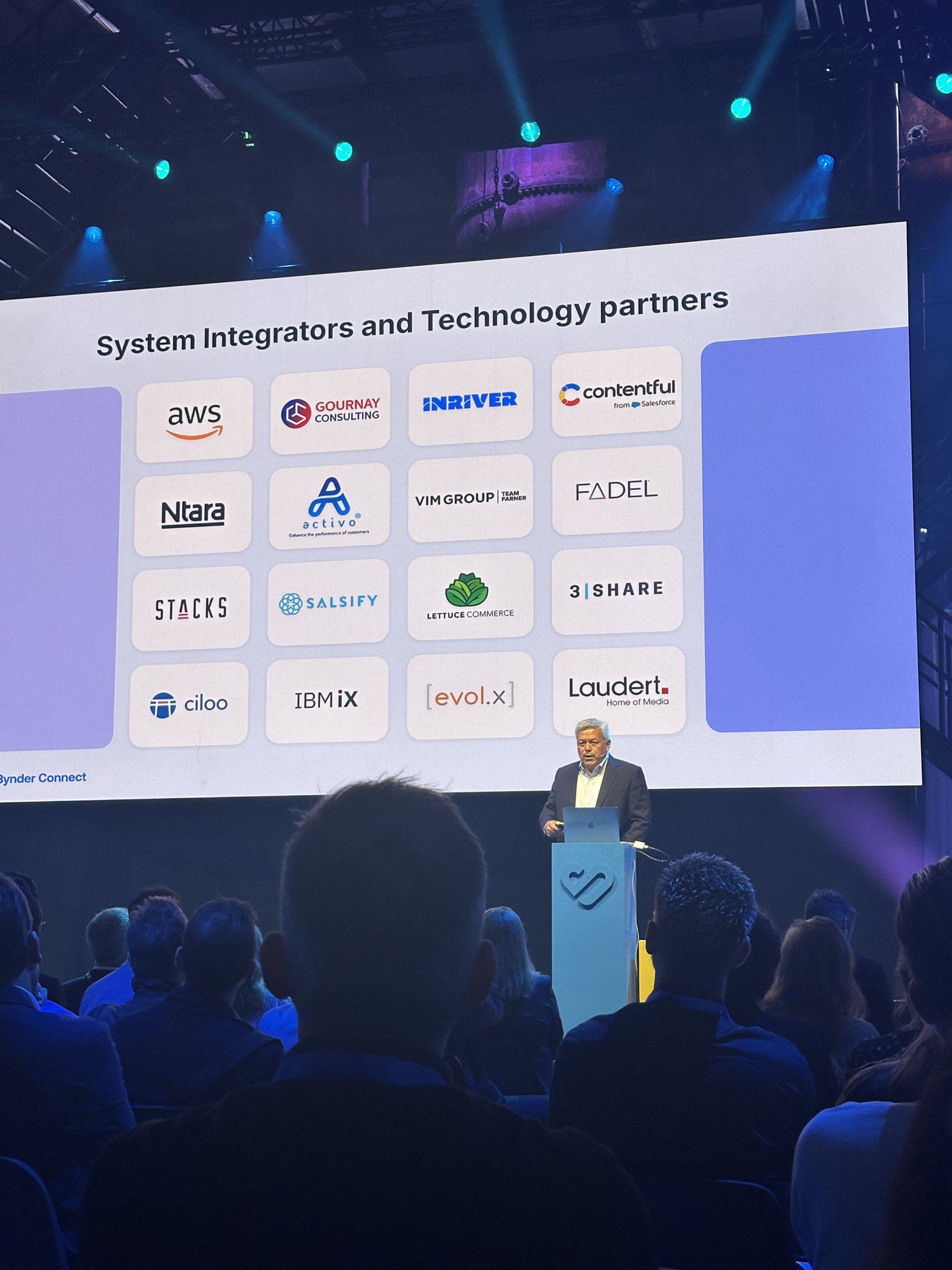
Stacks is a Bynder partner and a digital asset management consultancy that works across platforms. When Bynder held its annual user conference in Amsterdam, we were there.
Bynder Connect Amsterdam 2026 took place on October 7 and 8 at the SugarFactory, a former sugar refinery turned event space on the edge of the city center. The venue was bright, industrial, and packed. Bynder brought together customers, partners, product leads, and its own executive team for two days of keynotes, breakout sessions, and a partner night that ran late.
Shelley Meeks, a DAM consultant at Stacks, attended on behalf of the team. What follows is what she saw, what stood out, and what we are bringing home to our clients.
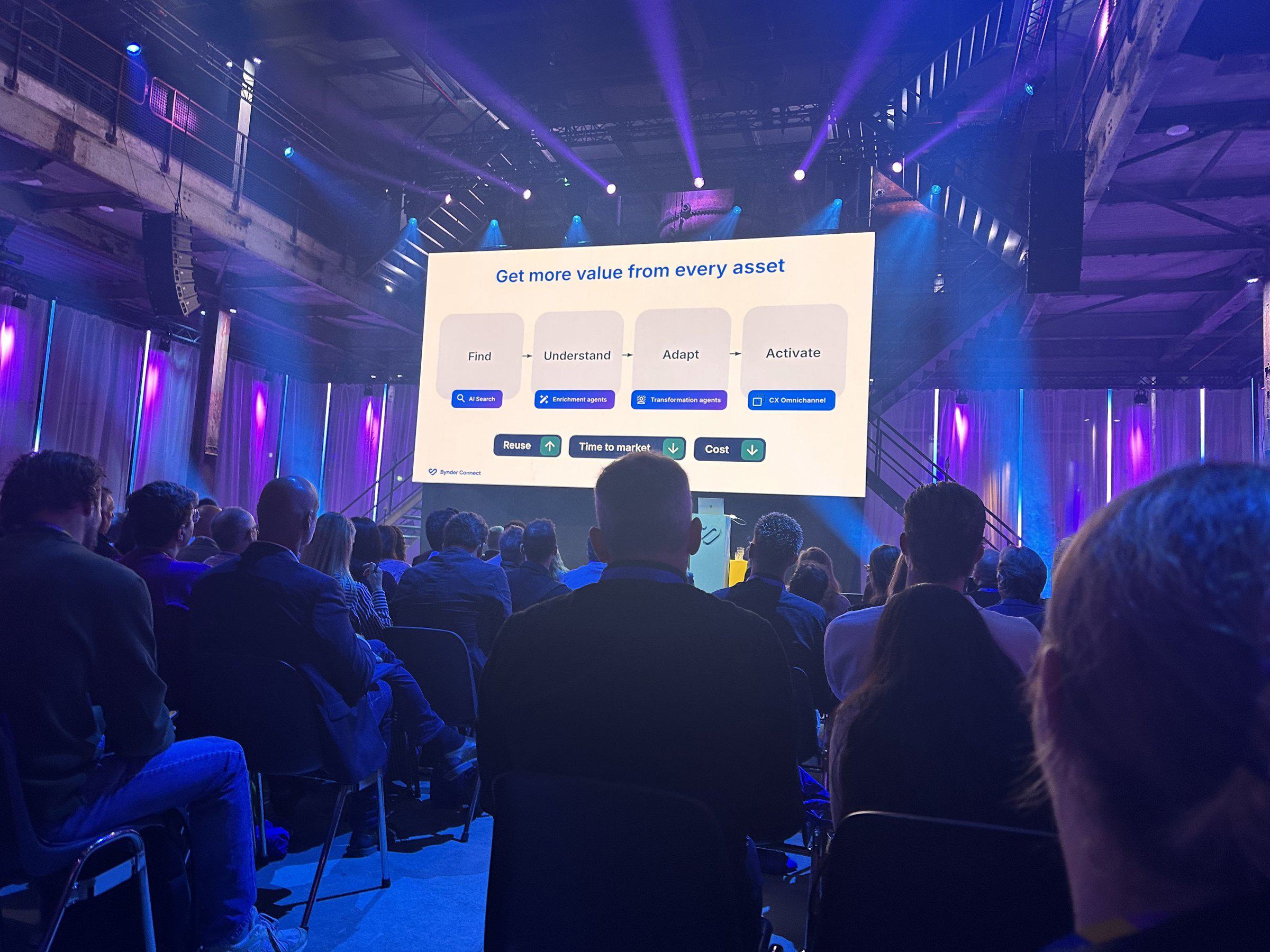
A Year Ago, AI Was a Side Note. This Year It Was the Whole Show.
At Bynder Connect 2025, artificial intelligence came up in a handful of sessions. It was interesting but optional. This year, AI was the organizing principle of the entire conference. Nearly every keynote and breakout tied back to how Bynder is embedding AI into the platform, and how customers are expected to use it.
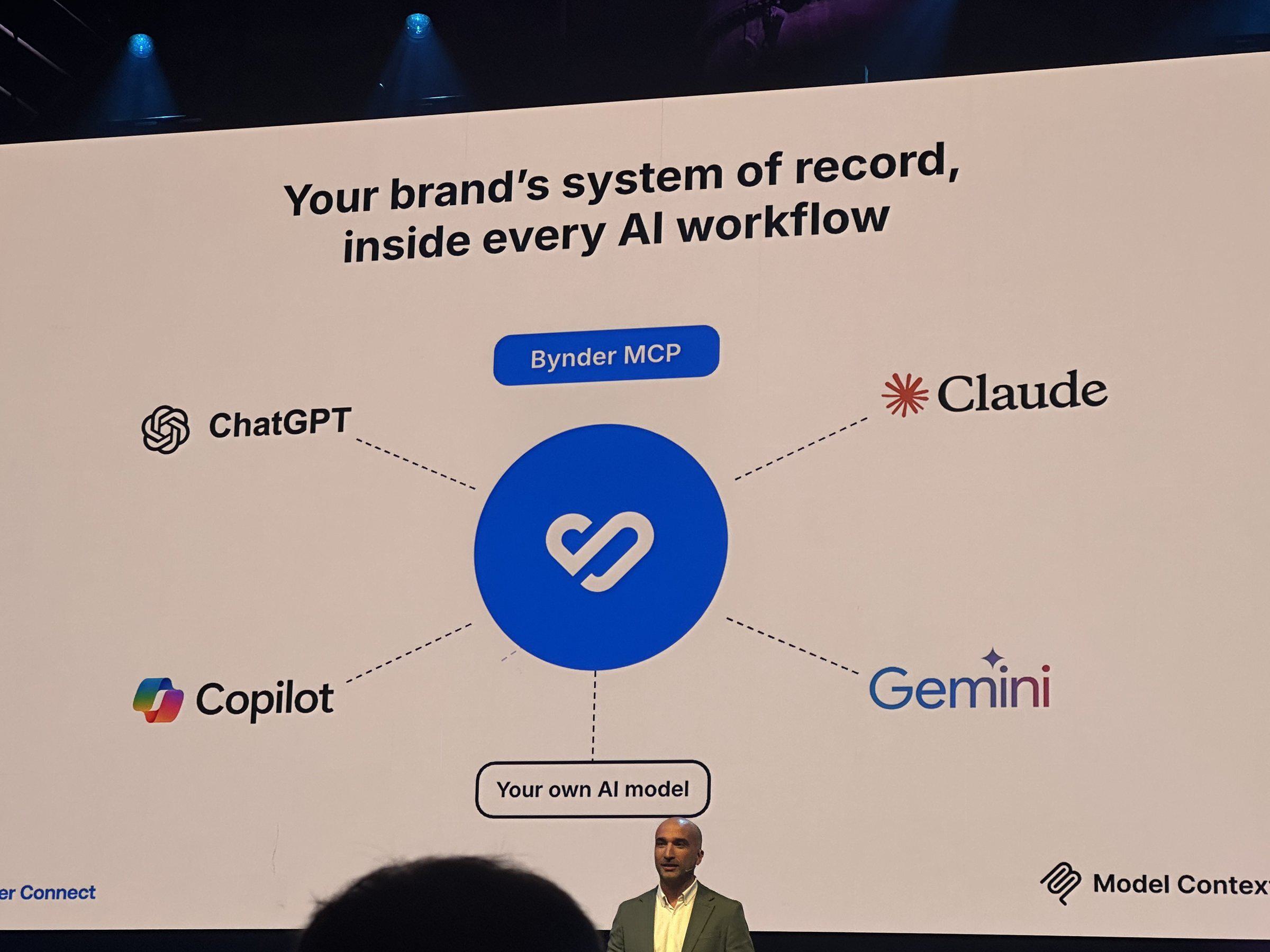
The shift was not subtle. Bynder's product team introduced a suite of AI agents designed to handle tasks that used to require a person clicking through the DAM: checking brand compliance, enriching metadata, transforming assets for different channels, and enforcing governance rules. These are not future-roadmap items. Bynder presented them as features shipping now or in the near term.
What Does Agentic AI Actually Mean at Bynder?
The term "agentic AI" showed up repeatedly. In Bynder's framing, an agent is a task-specific AI that operates inside the DAM with a defined scope and set of rules. The brand compliance agent, for example, reviews assets against a brand's style guide and flags violations before the asset is published.
What made the demo compelling was the specificity. The compliance agent did not just say "this asset may not be on brand." It pointed to the exact element that was off, whether that was a color value, a logo placement, or a font choice, and cited the rule it was enforcing. That level of detail matters for teams that manage hundreds or thousands of assets and cannot review each one manually.
The Bynder MCP Server: The Question Everyone Was Asking
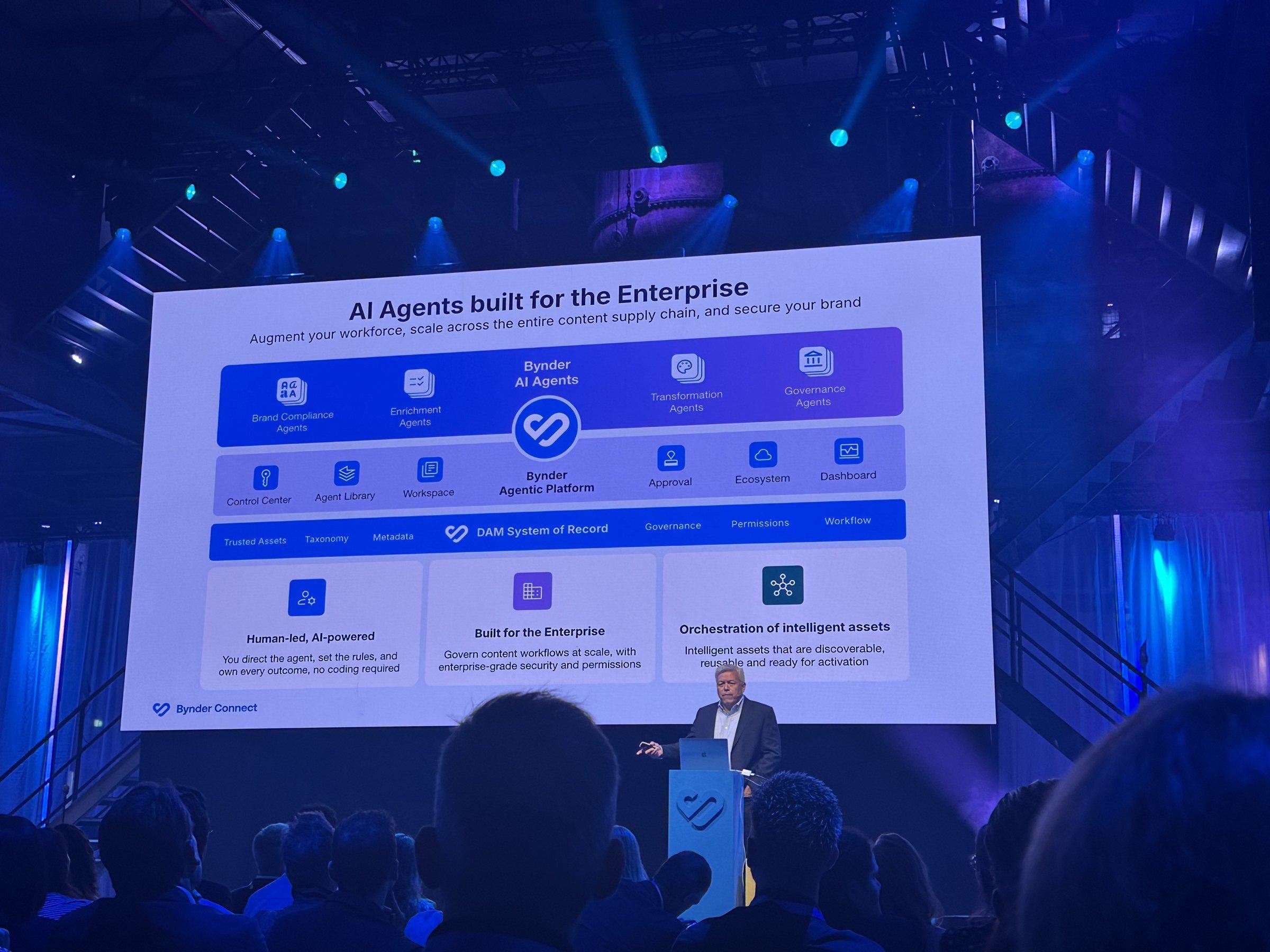
One of the most talked-about announcements was Bynder's MCP server. MCP, or the Model Context Protocol, is an open standard that lets AI tools like Claude, ChatGPT, and Copilot connect to external systems and pull real data into their responses. With Bynder's MCP server, an AI assistant can search the DAM, retrieve assets, read metadata, and use that information in its output without anyone copying and pasting links.
The practical effect is that a marketer working in an AI tool can ask for an asset, and the AI pulls it directly from Bynder. No switching tabs. No searching the DAM separately. The asset shows up where the person is already working.
This was the session that drew the most follow-up questions. People wanted to know when it would be available, how permissions would work, and whether it could connect to tools beyond the ones Bynder demoed. The answer to the last question was yes, because MCP is an open protocol, not a proprietary Bynder integration.
Michael Kors and the Real Reason Change Is Hard
Elena Kendall and Alex Duncan from the Michael Kors team presented on what it actually takes to roll out a DAM across a global fashion brand. Their story was less about the technology and more about the people. The system worked. The challenge was getting hundreds of users across multiple regions to change how they found, shared, and approved creative assets.
Their advice was practical and specific. A few takeaways that translate directly to other DAM rollouts:
- Start with the pain. Do not lead with the tool. Lead with the problem the team already knows it has. If people do not see their own frustration reflected in the pitch, they tune out.
- Pick a small, visible win first. Michael Kors started with a single workflow that touched a lot of people. When that workflow got faster, the team had a proof point they could show everyone else.
- Train in context, not in a vacuum. Their training sessions used real assets and real tasks, not sample files. People learned the system by doing the work they were already responsible for.
- Name the resistance out loud. They acknowledged that some teams did not want to change. Instead of ignoring that, they addressed it directly and gave those teams a voice in the process.
The World Cup, Behind the Scenes
One of the more memorable sessions was a behind-the-scenes look at how a major sporting organization used Bynder to manage creative assets during a global tournament. The scale was staggering: thousands of assets created, reviewed, and published across dozens of markets in a compressed timeline. The takeaway was not just that DAM made it possible, but that without a system in place, the operation would have collapsed under its own weight.
A DAM Is Something You Do, Not Something You Own
A thread that ran through multiple sessions was the idea that a DAM is not a product you buy and forget. It is a practice you maintain. Several speakers returned to this point: the organizations getting the most from Bynder are the ones that treat it as an ongoing program, not a one-time implementation.
That lines up with what we see at Stacks. The clients who succeed with DAM are the ones who keep investing in governance, training, and taxonomy after the initial rollout. The ones who treat the launch as the finish line almost always run into trouble six to twelve months later.
The Slide We Keep Coming Back To
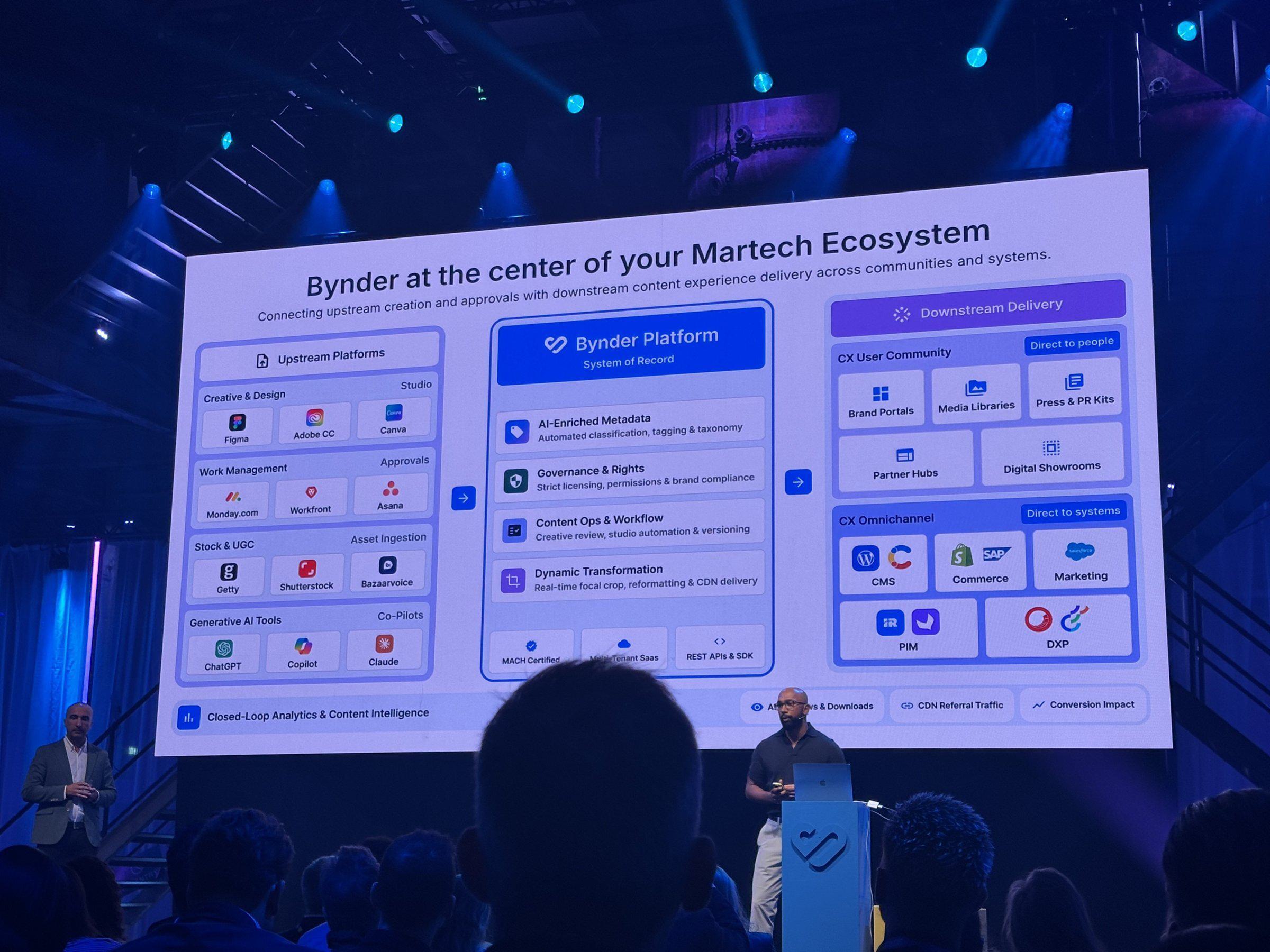
One slide from the keynote captured the theme of the entire conference. It showed Bynder positioned as the system of record at the center of a content ecosystem. On one side: creative tools, work management platforms, stock libraries, and AI. On the other: brand portals, websites, commerce platforms, and marketing channels. Bynder sat in the middle, connecting input to output.
That framing matters because it reflects a shift in how DAM vendors are positioning themselves. Bynder is not just a place to store files. It is pitching itself as the connective layer between where content is made and where content is used. Whether that vision fully delivers is still playing out, but the ambition is clear.
The Best Part Was Not on the Agenda
The partner night at Bynder Connect is where the real conversations happened. After the sessions ended, Bynder hosted partners and customers for an evening that included drinks, food, and a surprisingly competitive round of darts. The informal setting made it easier to talk openly about what was working, what was not, and where the market was headed.
For Stacks, partner night was a chance to connect with other system integrators, technology partners, and Bynder's own team in a way that conference sessions do not allow. Some of the most useful insights from the trip came from those conversations, not from the stage.
What We Are Bringing Home to Our Clients
A few things from Bynder Connect are going straight into our work with clients:
- Healthcare and accessibility. Bynder's product roadmap includes features aimed at regulated industries and accessibility requirements. For our clients in healthcare, this is directly relevant to how they manage and distribute assets under compliance constraints.
- Taxonomy training. The Michael Kors session reinforced something we already practice: training works best when it uses real assets and real workflows. We are doubling down on that approach in our taxonomy and training engagements.
- MCP readiness. We wrote about MCP before the conference and now we have seen it demonstrated in a production DAM. We are advising clients on what MCP means for their stack and how to prepare for it.
Your Monday Move
If you were not at Bynder Connect, here is one thing you can do this week: ask your DAM administrator whether your instance is ready for AI-assisted workflows. That does not mean buying a new tool. It means checking whether your metadata is clean, your taxonomy is consistent, and your governance rules are documented. Those three things determine whether AI features, from any vendor, will work well or fail quietly.
If you want help figuring that out, talk to a DAM consultant.
FAQ
When and where was Bynder Connect Amsterdam 2026?
Bynder Connect Amsterdam 2026 was held on October 7 and 8 at the SugarFactory in Amsterdam, Netherlands.
What is the Bynder MCP server?
The Bynder MCP server uses the Model Context Protocol, an open standard that lets AI tools like Claude, ChatGPT, and Copilot connect directly to Bynder. It allows AI assistants to search the DAM, retrieve assets, and use metadata without anyone leaving their current tool.
What is Bynder's Brand Compliance Agent?
Bynder's Brand Compliance Agent is an AI agent that reviews assets against a brand's style guide before publication. It identifies specific violations, such as incorrect colors, logo placements, or fonts, and cites the brand rule being broken.
Is Bynder a good fit for a team that is new to DAM?
Bynder works well for teams at different stages of DAM maturity. The Michael Kors session at Bynder Connect showed that success depends less on the platform and more on how the rollout is managed, including training, governance, and change management.
Does Stacks work with Bynder?
Yes. Stacks is a Bynder system integrator partner. We help organizations plan, implement, and optimize Bynder, including taxonomy design, metadata strategy, training, and ongoing governance.